
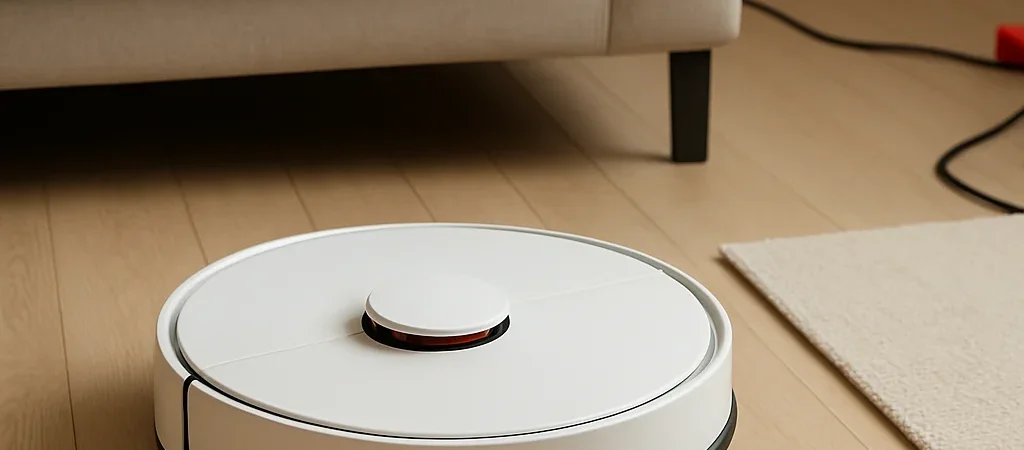
The first question about a robot vacuum is not whether it can clean while you are out. It is whether it can move through your home without getting stuck under a chair, tangled in a charging cable, or stopped by a tall threshold. A realistic look at the floor plan makes the decision clearer than a long list of app features.
Check the route, not just rooms
Walk the route you expect it to cover and look for rug edges, low furniture, floor vents, and transitions between rooms. Measure tight clearances where the robot would need to pass, and consider whether cords or small objects can be picked up before a scheduled run. Stairs need a boundary or physical separation; a robot vacuum does not replace a person checking the space.
Floor plans matter in multi-level homes, too. A robot designed for one mapped level may need to be carried to another, and you should check how the specific model handles maps and boundaries before relying on it to avoid particular areas. Convenient navigation still depends on setup that fits the house.
Keep expectations grounded
Robot vacuums are best considered routine floor-maintenance tools, not a complete replacement for a vacuum you can direct by hand. Corners, stairs, upholstery, and an unexpected spill may still call for another tool. Models with a mop feature also have their own upkeep and surface limitations, so read what the manufacturer says about compatible floors and care.
Before comparing models, decide which inconvenience you most want to reduce: frequent visible crumbs, pet hair on open floors, or the effort of keeping a regular schedule. Then weigh navigation, bin handling, and maintenance against that specific need. Our first verified deal selection is coming soon, not available yet; any future affiliate links may earn a commission and will be identified.